Movement Longevity — with David Quenzer
I restore the joint movement and coordination your body was made to use — so your pain can actually resolve.
Feel the Difference — Schedule Your First VisitIncludes a full evaluation and treatment in one session.
The pain keeps coming back. Each round of treatment helps for a while, then you’re right back where you started. The list of things you avoid is growing — the hike, the garden, getting down on the floor with the people you love.
Somewhere in the back of your mind, you’ve started wondering if this is just how it’s going to be
You don’t want another open-ended treatment plan. You want someone who can find the actual source, address it, and give you a clear finish line.
Rehabilitation through insurance was not designed to find what is causing your pain. It was made for acute recovery — getting someone up and walking after a stroke, a car accident, or a major surgery. For that purpose, it works well. It is built to get you to roughly 75% of where you were.
That is functional. It is not thriving
The pattern goes like this: stretch what feels tight, strengthen what tests weak, discharge when visits run out. What that process never asks is the follow-up question — why is that muscle tight? Why did that other muscle stop firing in the first place?
Without answering that, the same problem returns. Sometimes in the same spot. Sometimes somewhere new. And you start the cycle again.
People I work with
Pinch and lift the skin directly over whatever hurts most — your foot, your shoulder, your low back. Pull it gently away from the muscle underneath. Now do the same thing on the opposite side that doesn’t hurt.
One side lifts easily. The other is tight, tender, or barely moves. You didn’t injure the skin. So why is it locked down on one side?
When something deeper isn’t stable — a joint that’s lost its natural motion, a coordination pattern that’s gone quiet — your body tightens the tissue above it as protection. That tightness is a response, not the problem itself. And it’s one of the first things I check.
If the painful side was noticeably tighter — that’s your body’s protective pattern at work. Has anyone ever tested this as part of your treatment? If the answer is no, you just found one of the things that’s been missed.
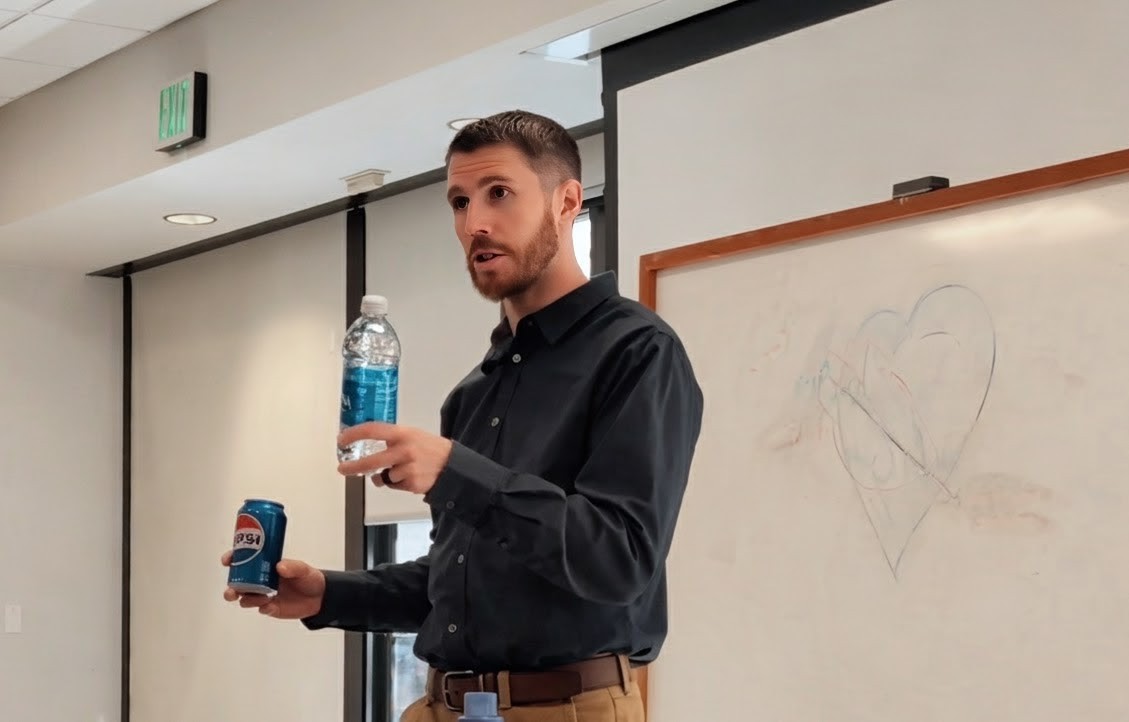
David Quenzer, DPT
For six years, I had chronic low back pain — while I was in physical therapy school. The irony wasn’t lost on me. I was learning how to treat the human body, and I couldn’t fix my own.
I went through three separate rounds of physical therapy at the highest-rated, insurance-based clinics in the area. I did everything they asked. Stretched what was tight. Strengthened what was weak. Did my home exercises. Showed up to every appointment. Each round helped for a while. Then the pain came back — every time.
Three different surgeons looked at my imaging and all recommended the same thing: fuse my spine. Hardware bolted to my vertebrae. Permanent. That was what healthcare said would protect me best. That was the consensus. Three independent opinions, same answer.
I said no.
Not because I knew something they didn’t. Because something didn’t sit right. If a trained physical therapist can’t resolve his own pain using the tools he was taught — the problem might not be the body. It might be the approach.
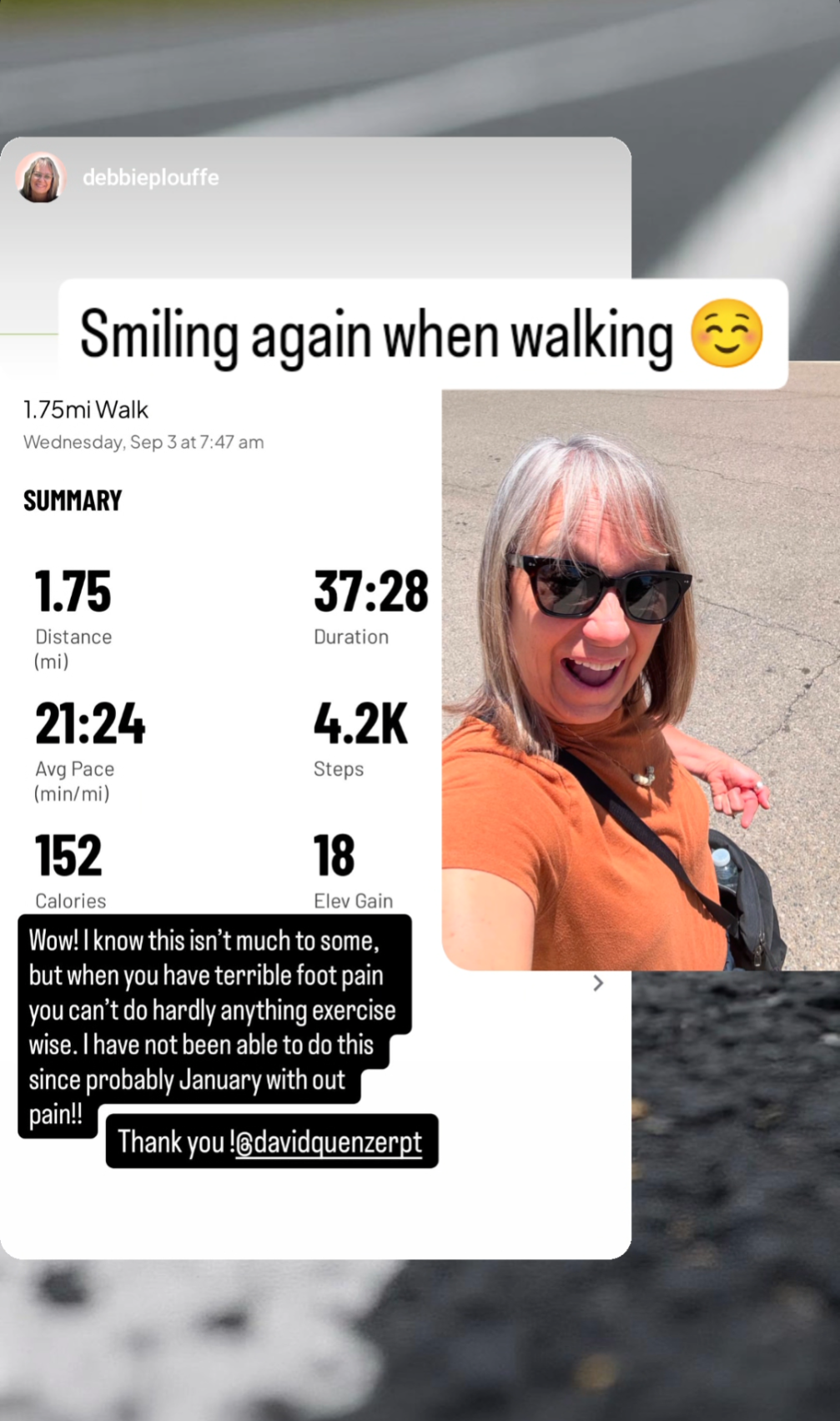
What I practice now is what I developed to solve my own pain — not manage it, resolve it entirely. And what I discovered about my own back turned out to explain what I was seeing in every patient: the runner with foot pain, the golfer with a torn shoulder, the parent who couldn’t pick up their child. Different location on the body. Same underlying movement system breaking down.
My name is David Quenzer, and my approach, Movement Longevity, does three things: I restore your actual joint movement, I reconnect the coordination patterns your body was made to use, and I teach your system to hold onto those changes.
“Three surgeons wanted to fuse my spine. David had me moving different in the first visit. Six weeks later I was back to jiu-jitsu. That was two years ago. Still training without thinking about my back.”— Mark R.
How would you know if what I do is going to help you — unless you feel it working?
Your first visit is designed so that the evaluation and treatment happen together. As I find each area that needs attention, I address it right then — and you experience the change in real time. By the end of the session, you don’t have to take my word for it. You’ll have felt it yourself.
Before my hands go on, I observe how you move in real life — standing, walking, sitting, getting up.
Where does your coordination flow naturally?
Where has your body found a workaround?
What are your strengths — the areas we can lean on?
These everyday movements reveal more than any isolated test. Your strengths become the starting point for everything that follows.
This is where most approaches stop at observation and schedule you for next time. Here, the treatment begins immediately.
A joint that’s been stuck begins to open
A muscle that went quiet starts to respond
A movement that felt guarded becomes easier
You feel it happening. Your body’s response during this session tells us both what’s possible and what to prioritize next.
We revisit the same movements from the beginning. The difference between how you moved walking in and how you move now answers the only question that matters:
Is my body responding to this approach?
Can I feel the change in my own body?
Do I trust what comes next?
That clarity is yours to keep. You leave knowing — not hoping, not wondering — whether this path is right for you.
An evaluation that only observes gives you information — but no experience. You leave knowing what’s wrong without knowing what improvement feels like. When treatment is woven into the evaluation, you leave with something more valuable: the lived experience of your body changing. That’s what builds confidence in the path forward.
You’ll understand what’s actually driving your discomfort — not just where it is, but where it comes from and why
You’ll have already felt your body respond. You know this works because you experienced it
A prioritized restoration plan connected to your goals, plus home movements to continue between visits
This is what I do — three layers of restoration, in every session, working together.
Your joints were made to move through specific ranges in specific directions. When they lose that freedom — through injury, stiffness, or years of limited use — the surrounding muscles and the joints above and below begin to compensate.
I work directly with each joint to restore its natural motion. This is hands-on, precise, and you can feel the range returning during the session.
Your body moves in connected patterns — your shoulder blade coordinates with your rib cage, your pelvis drives your legs, your core anticipates every movement before it happens. When pain or stiffness disrupts these patterns, your brain finds workarounds.
I retrain the natural coordination your body was made to use, drawing on the same developmental sequence every human follows from infancy through walking.
Restoring movement isn’t enough if it doesn’t hold. Your brain reshapes itself around what you practice — this is how learning works at every age. I use purposeful, guided repetition so your restored patterns become your default patterns.
You also leave with home movements designed to reinforce what we’ve restored, so the work continues between sessions and the changes last.
Full-body functional movement patterns reveal where things are breaking down — not just where they hurt.
Hands-on assessment finds the exact structure causing the problem. Often in a completely different area.
Mobilize the restriction. Retrain the muscles that stopped working. Teach the brain a better movement strategy.
A specific plan made for your body. Movement that holds because the source was actually resolved.
The source is resolved. The compensation is no longer necessary. The pattern breaks.
“I’m a runner. Had IT band pain for three years. Every PT gave me the same stretches and strengthening exercises. Temporary relief, then back to square one. David found what they didn’t check. Three weeks later I ran a half marathon. Still running. No warm-up routine required anymore. I just lace up and go.”— Jennifer L.
What I found when the standard approach didn’t work — and what I do differently now
What an assessment looks like in person
The hike gets shorter. Then it stops
The grandkids get picked up less. Then not at all
Your morning starts with assessing how your body feels before deciding what’s possible today
Every appointment ends with “let’s schedule another visit” — and no one gives you a finish line
You get up and go without a mental checklist of what your body can handle
You play the full round. You sit through the flight. You garden until you’re done, not until it hurts
No daily exercises to maintain — your body holds the changes on its own
You stop thinking about your body and start living in it again
Where you feel pain is simply where your weakest link lives. But when that pain shows up in slightly different spots — your back one month, your hip the next, your foot after that — that reveals a movement system problem. And a movement system problem needs a whole-body solution, not a single-joint fix.
26 bones per foot, made to adapt to every surface and power every step you take
When these small joints stiffen, the effects ripple upward through your knees, hips, and back
I restore joint-by-joint mobility, reawaken push-off muscles, and integrate it into the way you actually walk
Restricted feet often trace back to stiff hips and a mid-back that has lost its rotation. Walking asks your whole body to participate.
Your low back was made to be steady — an anchor between mobile hips and a rotating rib cage
When those neighbors stiffen, your low back quietly takes on their work — far more than it was designed for
I restore mobility where it belongs and retrain the small muscles right alongside your spine to engage on their own again
Your breathing muscle connects directly to your lower spine. Restoring the way you breathe often transforms how your back feels.
Your shoulder blade glides along your rib cage in four directions — when any locks up, the joint absorbs the strain
Desk work, devices, and driving draw your shoulders forward and limit your mid-back rotation over time
I restore all four directions, free the rib cage beneath, and reconnect your shoulder to your core and breath
When the shoulder blade can’t do its work, neck muscles step in. Shoulder discomfort, neck tension, and headaches are often one connected pattern.
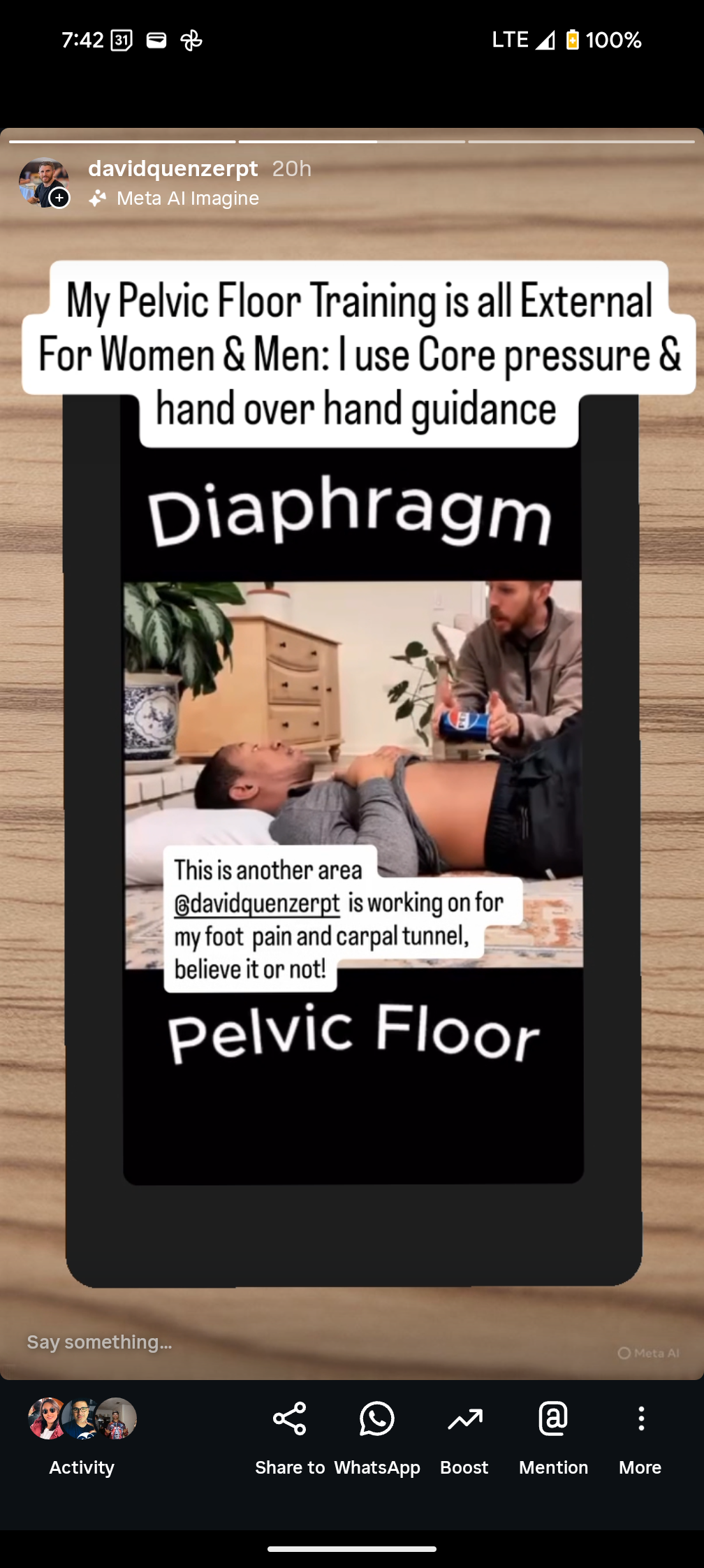
Your neck muscles have two jobs: hold your head upright and move it where you want to look. When your core pressure system isn’t supporting your posture, your neck tries to do both at once
You cannot consciously think your way into better posture. Sitting up straighter is a temporary override. A real solution has to be automatic — your body holding you upright without you managing it
I restore the core pressure system that supports your head from below — so your neck muscles are free to move your head instead of carrying it. Working 8+ hours at a computer without neck pain is reasonable when the support system is doing its job
Neck pain is rarely a neck problem. It’s a support problem. When the trunk and rib cage underneath can’t hold you upright automatically, the neck pays the price — twenty thousand times a day, with every breath.
Losing trust in your balance changes how you move through your entire day — which stairs you take, whether you reach overhead, how carefully you step off a curb
If getting down to the floor and back up has become difficult or something you avoid, that’s a signal that key movement patterns have gone quiet — not that your body is too old
I restore the coordination and joint movement that your balance depends on — from the ground up through your feet, hips, and core — so your body can hold you steady without you thinking about it
Balance isn’t a single skill — it’s the output of your whole movement system working together. When the system is restored, confidence in your body returns naturally.
“I couldn’t pick up my grandkids. Couldn’t garden. PT for four months gave me relief that lasted about six weeks each time. David found what they didn’t check. Five weeks later, I was doing everything again. That was eight months ago. I don’t wake up assessing how my back feels anymore. I just get up and go.”— Patricia S.
Your first visit includes a full evaluation and treatment. You’ll feel the difference in your own body before you leave — and you’ll have a clear plan for what comes next.
Because each client gets unlimited visits over 5 weeks, I can only work with a small number of people at any given time.
Feel the Difference — Schedule Your First VisitMovement Longevity with David Quenzer — Clovis, CA